Course: Artificial Intelligence | AIA-01
Module 1: Artificial intelligence fundamentals
Lecture 2: Artificial Intelligence Demystified
Lecturer: Gerardo Marx
👋 Hello Artificial Intelligence Apprentice!
Welcome to your first step into the exciting world of artificial intelligence (AI), where computers learn from data to make predictions, identify patterns, and even surprise us.
But what does that actually mean? Let’s break it down in simple terms with examples.
What is AI?

Artificial Intelligence (AI) is a broad field of computer science that focuses on building systems capable of performing tasks that typically require human intelligence. These tasks include understanding natural language, recognizing patterns, solving problems, making decisions, and even demonstrating creativity. The goal of AI is not just to imitate human behavior, but to create algorithms and systems that can learn, adapt, and improve over time.
However, not all AI systems are real “intentions” to create artificial intelligence. In 1770, Wolfgang von Kempelen created a machine known as “The Chess Turk” -Der Schachtürke- a trick automaton that appeared to play chess against human opponents. The Turk was advertised as a robot that could think, but it actually put a human chess master inside in a hidden way 1.
Nowadays, several fields of study co-exist and develop in AI. The image below shows the current sub-fields of study for an AI learner.
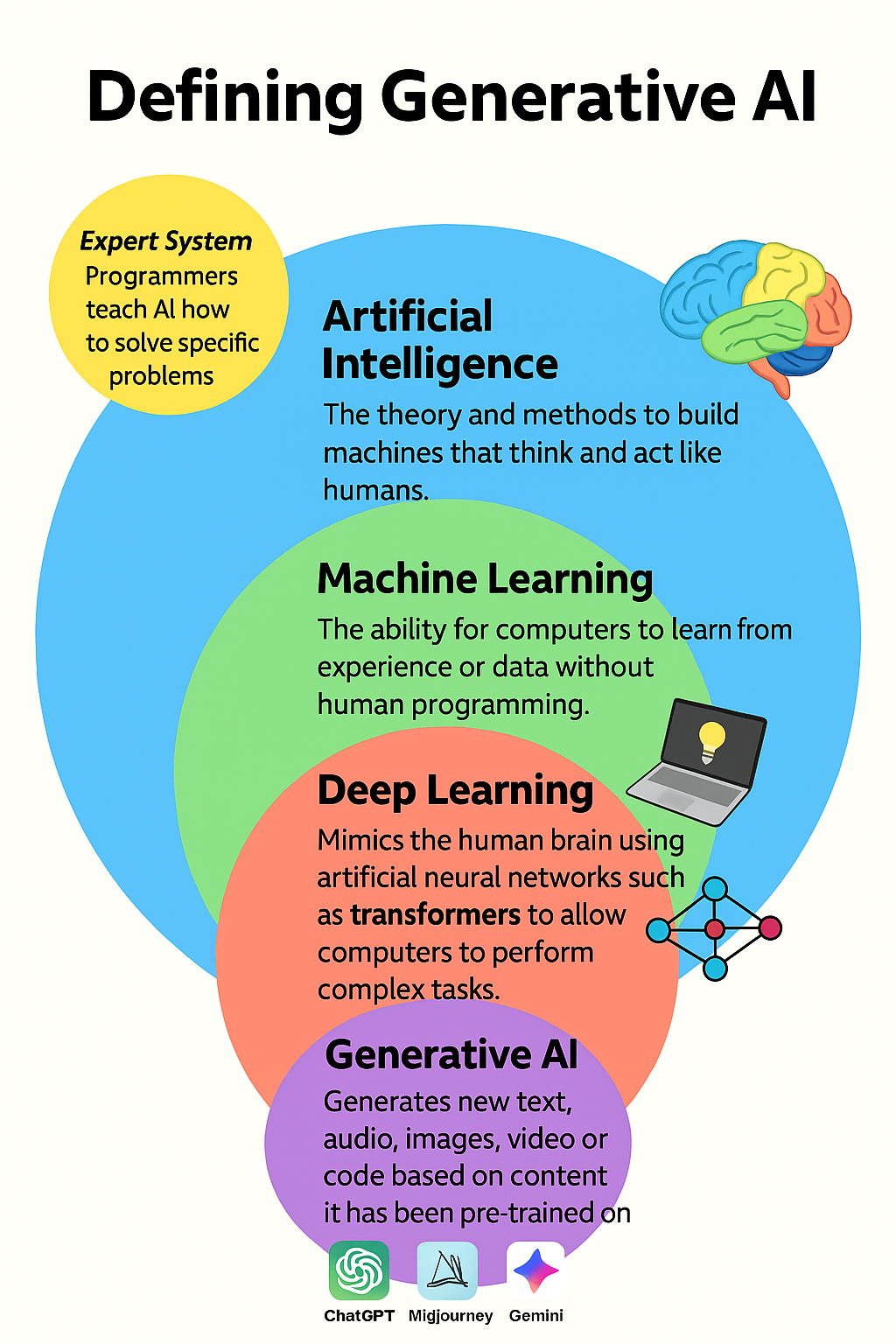
AI can be considered as the theory and methods for building machines that think and act like humans. This field encloses several areas, including Machine Learning (ML), which focuses on systems that learn from experience or data. Within ML, Deep Learning represents methods that rely on artificial neural networks (ANNs) to perform complex tasks, such as image or pattern recognition. At the core is Generative AI, a specialized type of deep learning that generates new content, such as images or text, based on learned patterns.
As you can observe, AI is a long journey. Thus, the course will focus on ML methods and theory to approach ANNs for regression and classification tasks. Later, we will utilize the ANNs to develop new control concepts.
Who is behind AI?
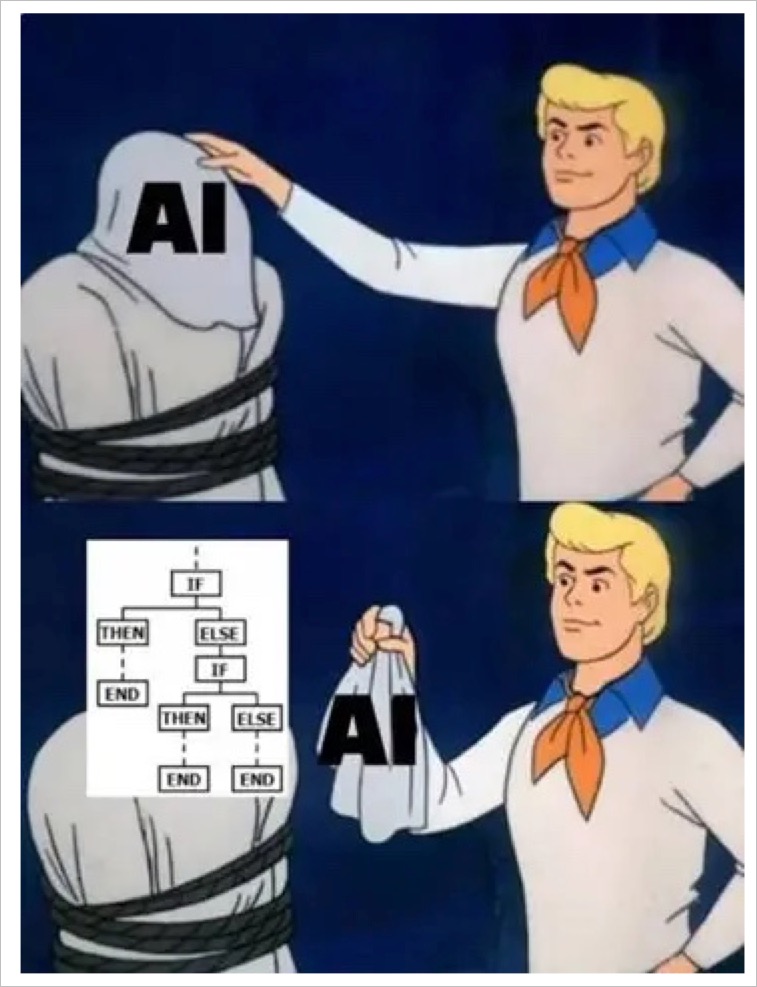 AI often sounds like an amazing, high-level programming concept—almost like science fiction brought to life. From smart assistants to self-driving cars, AI appears to act with human-like intelligence. However, beneath that impressive surface lies a foundation built not on magic, but on mathematics, statistics, and programming.
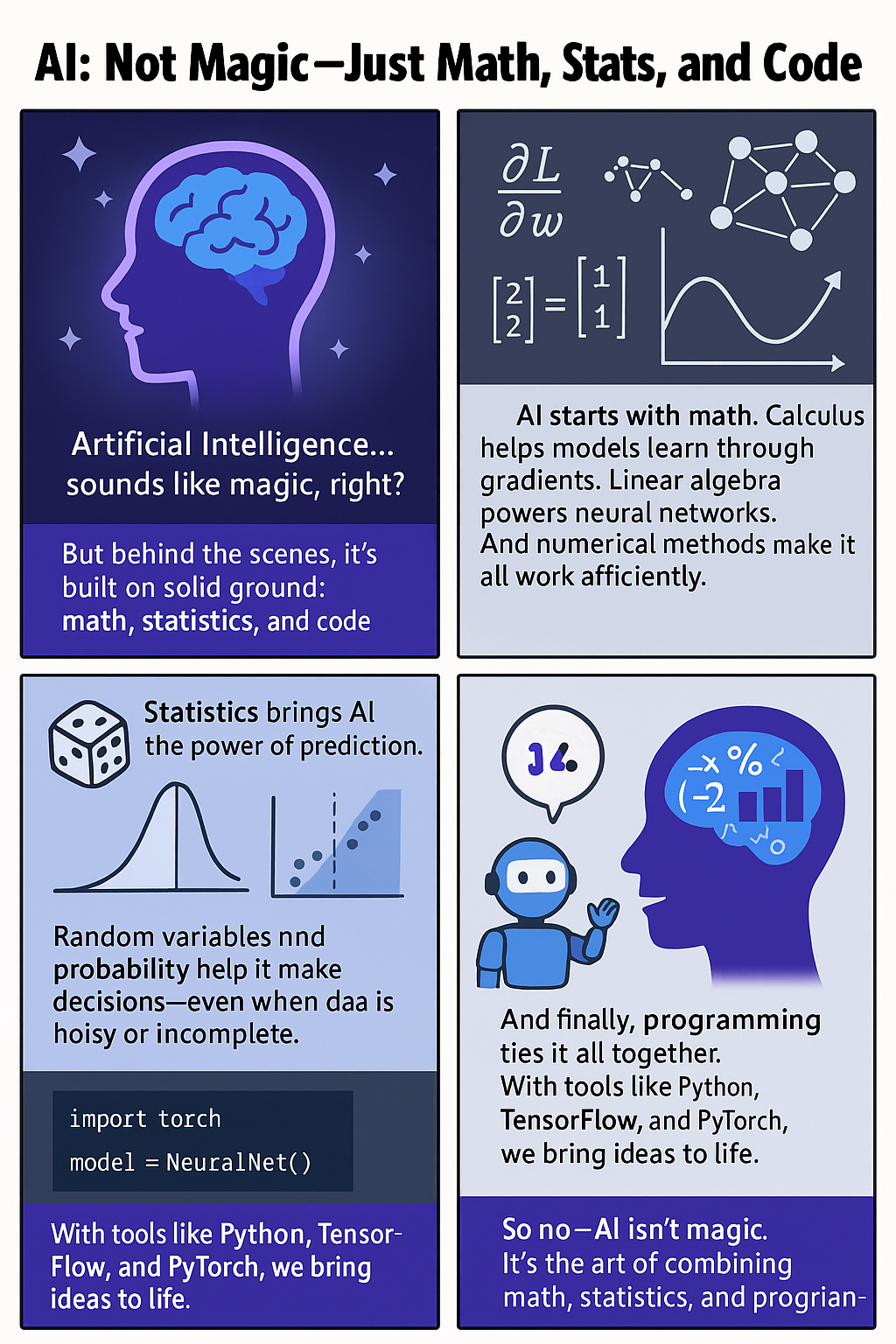
Take your time to really know IA
I’ve posted some links about IA here that will help you with your first approach to this great and interesting topic. Watch them when you have some free time:
- Trabajadores de datos: el costo humano de la inteligencia
- ¿La inteligencia artificial amenaza la identidad humana?
- Inteligencia artificial: el costo climático oculto
- ¿Qué son los deepfakes? Los trucos para detectar las falsificaciones de videos.
- La IA en la educación: ¿mejora o perjudica el aprendizaje?
- Deepseek revoluciona el mundo de la IA
Footnotes
-
T. Standage, The Turk: The Life and Times of the Famous Eighteenth-Century Chess-Playing Machine. New York, NY, USA: Walker & Company, 2002. ↩